When specification matters, why take the risk?
David Loughran, Technical Manager at Keylite explores why getting the specification right is essential for building performance.

The drive towards more thermally efficient buildings has never been stronger. Regulations are tightening, energy costs remain a concern for homeowners, and the industry is under increasing pressure to deliver buildings that perform as designed. Yet despite the knowledge, products and technology available to us today, thermal performance issues continue to arise on projects across the country.
The truth is that there are no excuses for not creating thermally efficient homes. We have the ability to design them. We have the materials to build them. We have regulations and compliance requirements that clearly define what is expected. The challenge is not a lack of capability, it is often a matter of decision-making.
That’s why one of the most important aspects of building performance is about getting the specification right and ensuring it is delivered correctly on site.
Small Decisions, Big Consequences
Thermal bridging remains one of the most common causes of heat loss in buildings. These weak points in the building envelope can significantly impact energy efficiency, increase heating demand, contribute to condensation risk and ultimately undermine the intended performance of a home. What’s concerning is that thermal bridges are often entirely avoidable.
In some cases, compromises are made in pursuit of cost savings. In others, they arise from a lack of technical understanding or an assumption that a seemingly minor detail will have little effect on overall performance. Unfortunately, building physics doesn’t work that way.
A decision that saves a few pounds during procurement can end up costing significantly more over the life of a building through increased energy consumption, remedial work or compliance challenges. More importantly, the building owner or occupier is left paying the price through higher bills and reduced comfort.
The Roof Window Challenge
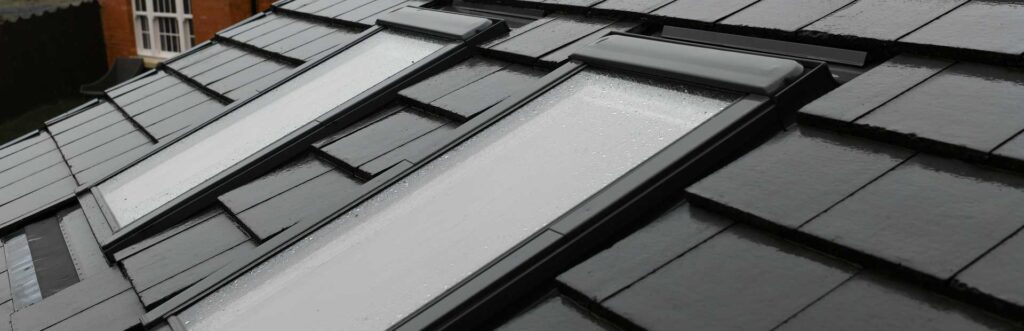
One area where specification decisions can have a particularly significant impact is around roof windows. The junction between the roof window frame and the surrounding roof structure represents a critical point in the thermal envelope. If this area is not properly insulated, thermal bridging can occur, creating a pathway for heat to escape and potentially increasing the risk of condensation. It is also an area where corners can sometimes be cut.
Traditional approaches often rely on additional thermal collar products being specified, ordered, supplied and installed correctly. While the solution may be available, there remains the possibility that it is omitted during specification, value-engineered out during procurement, forgotten during installation or simply not fitted correctly.
In some instances, on site solutions include using left over insulation boards, cutting them to fit. This often creates cold spots and is far from ideal.
Removing Risk Through Better Design
This is where product innovation can make a real difference. Keylite’s award-winning Integrated Expanding Thermal Collar has been designed specifically to eliminate the risk of cold bridging. Unlike many roof window systems where a thermal collar must be purchased as a separate accessory, Keylite integrates the thermal collar into every roof window as standard. Once activated, it expands to fill the gap between the window frame and the roof structure, helping to protect against thermal bridging and improve airtightness.
This approach is significant because it removes the opportunity for an important thermal performance component to be overlooked. When the thermal collar is built into the product as standard, it does not become an optional extra or a procurement decision. It is simply there by default.
In an industry where performance often depends upon consistent specification and installation, reducing the number of variables can make a substantial difference.

Responsibility Matters
Ultimately, specification and installation is about responsibility. Architects, housebuilders, contractors and installers all play a role in ensuring buildings perform as intended. Each decision contributes to the outcome. While there may be multiple product options available, the best solutions are often those that make doing the right thing easier.
The responsibility does not end with selecting a compliant product. It extends to understanding how that product will be installed and whether its performance relies upon additional decisions being made further down the line.
Products that simplify compliance, reduce opportunities for error and build performance-critical features into the standard specification can help remove uncertainty from the process.
The Key Point
The key point is simple: every specification decision matters. We know how to build thermally efficient homes. We have access to the technology, materials and expertise required to meet today’s demanding performance standards. What we cannot afford is to allow avoidable compromises to undermine those efforts.
Thermal bridging may seem like a small detail, but small details often have the greatest impact on building performance.
As professionals, we have a responsibility to ensure correct specification and installation. While there will always be choices to make, selecting solutions that eliminate risk rather than introduce it is usually the smartest decision of all.
When a feature as important as thermal bridge protection can be integrated into the product as standard, rather than relying on additional purchasing and installation decisions, it becomes easier to deliver the performance homeowners expect and regulations demand.
And when it comes to creating warmer, more efficient and more compliant homes, that’s a decision that should be easy to make.

The Key Point is…
Every specification decision matters – small compromises can have a significant impact on thermal performance and long-term building efficiency.
Thermal bridging needs greater attention – seemingly minor junctions and details can undermine the performance of the wider building envelope.
Reducing risk should start at the design stage – simplifying specification and removing opportunities for error can help close the gap between designed and as-built performance.
Delivering performance is a shared responsibility – closer consideration of specification, procurement and installation is essential to achieving homes that perform as intended.



Signature Projects

Careers
Find out why over 2,000 colleagues have decided to grow a rewarding career with the Keystone Group. Find out more
Find out why over 2,000 colleagues have decided to grow a rewarding career with the Keystone Group.

About Keystone Group
Our reputation is built on our strong focus on innovation and a dedication to delivering the best service to our customers. Find out more
Our reputation is built on our strong focus on innovation and a dedication to delivering the best service to our customers.