The Devil is in the Detail: What the Future Homes Standard really means for delivery
By Chris Gaze, Future Homes Hub
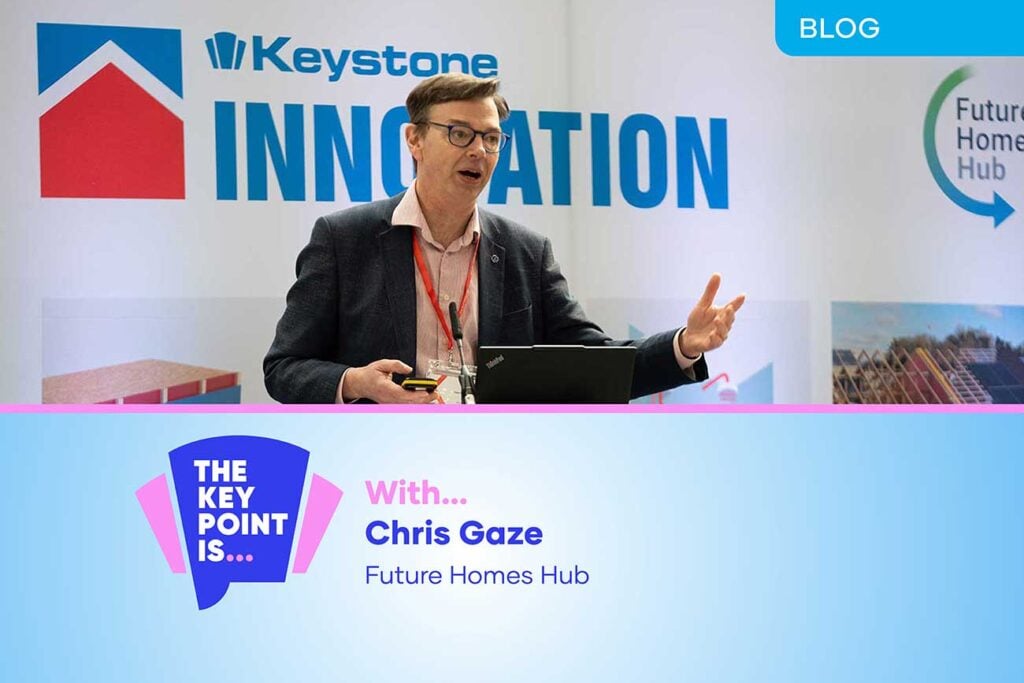
The Future Homes Standard represents a major shift for the construction industry, moving towards all-electric, low-carbon homes and raising the bar for design, construction and performance. In this blog, Chris Gaze of Future Homes Hub explores the practical challenges behind delivery, from heat pump performance and grid capacity to customer experience, commissioning and the importance of getting every detail right.
After years of anticipation, the Future Homes Standard has finally arrived. Across the sector, the initial response has largely been one of relief: we now have certainty about the direction of travel. That relief, however, is quickly followed by a more sobering realisation that the real work starts now. While much of what has landed aligns broadly with expectations, translating policy into practical, scalable delivery is where the challenge truly lies. As ever, the devil is in the detail.
Once the headline announcements fade, the sheer volume of supporting material becomes apparent. The Standard is underpinned by hundreds of pages of documentation, guidance and modelling assumptions. Fully understanding what this means for optimising design, cost, construction, customer experience and long-term performance cannot be done at a glance. At the Future Homes Hub, we have therefore turned our attention to digging into that detail, bringing together expertise from across the sector to understand not only what the rules say, but how they play out on real sites, at real scale.
What is already clear is that the Future Homes Standard represents a step change, not a gentle adjustment to existing practice. This is not simply an incremental tightening of Part L, it marks a decisive shift to all‑electric homes. Gas boilers are on their way out, as are gas cookers, with heat pumps, excellent fabric standards and high levels of solar PV becoming the norm. In many respects, particularly around fabric performance, this reflects where many parts of the industry were already heading.
The real test of the Future Homes Standard will be how homes perform once people move in. What will be the customer experience? Historically, gas boilers have been forgiving – they are typically oversized, masking any potential fabric deficiencies. Heat pump systems do not offer that margin for error, they must be appropriately sized, designed, installed and commissioned to operate efficiently and comfortably.

This introduces a new level of complexity. Achieving good outcomes is no longer about individual components but about getting the whole system right – the fabric, heating design, installation quality and commissioning must all work together. Under the Future Homes Standard, poor execution will surface through customer experience, whether that is homes that are harder to heat, more expensive to run, or difficult to understand.
To help the sector navigate this transition, the Future Homes Hub has identified seven key actions that are critical to de‑risking delivery and ensuring readiness at scale. The first is the importance of leading early, learning quickly and sharing lessons. Evidence consistently shows that early readiness is less costly than late compliance, and that organisations benefit from pilot projects that allow them to gain rapid feedback that they can apply to mainstream delivery. Closely linked to this is the need to prioritise grid availability from the outset, recognising that an all‑electric future depends on infrastructure that cannot be treated as an afterthought.
Equally important is owning the customer journey. Low‑carbon homes will only succeed if customers understand how to live in them, from heating controls to ventilation systems. This requires clear communication, thoughtful handover processes and robust aftercare. Design evolution is another critical factor. Homes designed around gas heating cannot simply be adjusted on paper to accommodate electric systems. Space planning, fabric performance and services design must evolve together.
Getting heating design right sits at the heart of successful delivery.
Accurate heat‑loss calculations and a joined‑up approach between designers and installers are essential. That intent then has to be carried through on site. Building as designed, rather than relying on last‑minute changes or workarounds, becomes increasingly important. Finally, commissioning must be treated as a critical stage, not an administrative one, with systems properly set up and checked to ensure they perform as intended once occupied.

Taken together, these actions reflect a broader conclusion about the Future Homes Standard. It introduces both challenge and opportunity in equal measure. The business risks are real – tighter margins, greater technical complexity and increased exposure if things go wrong. But the opportunity is equally significant. There is the chance to deliver homes that are more comfortable, more resilient, cheaper to run and genuinely aligned with the expectations of future occupiers.
Ultimately, success under the Future Homes Standard will depend on leadership and alignment across organisations. This is not a challenge that can be solved by design teams, site teams or customer teams working in isolation. It requires a shared understanding of outcomes, strong coordination across disciplines and a commitment to learning as the industry transitions. At the Future Homes Hub, our role is to support that journey by convening expertise, sharing emerging good practice and helping the sector move confidently from regulation to real, high‑performing homes.

The Key Point is…
- The Future Homes Standard places far greater emphasis on high-performing building fabric, with insulation, airtightness and thermal performance playing a critical role in overall home efficiency.
- Homes must be designed as complete systems, where fabric performance, heating design and ventilation work together to deliver comfort and energy efficiency.
- Building as designed is becoming increasingly important, with less room for on-site changes, workarounds or poor execution that could compromise performance.
- Collaboration from the outset is essential. Successful delivery cannot sit with one team alone – designers, site teams, installers, customer teams and suppliers must work together with a shared understanding of outcomes to ensure homes perform as intended.
Find out more about the Future Homes Hub Technical Conferences Future Homes Standard Technical Conferences

Signature Projects

Careers
Find out why over 2,000 colleagues have decided to grow a rewarding career with the Keystone Group. Find out more
Find out why over 2,000 colleagues have decided to grow a rewarding career with the Keystone Group.

About Keystone Group
Our reputation is built on our strong focus on innovation and a dedication to delivering the best service to our customers. Find out more
Our reputation is built on our strong focus on innovation and a dedication to delivering the best service to our customers.